

Marketing teams are running into a new kind of invisibility problem. Your content can be accurate, rank well, and still never show up in AI-generated answers.
About 60% of searches now end without a click, meaning users often get what they need directly on the results page rather than on your website.
This changes the game. Your job is no longer just to be correct. Your job is to be the safest explanation for an answer engine to reuse.
What changes when more than one answer is correct?
In AI search, correctness is the entry ticket, not the differentiator. Answer engines pull from multiple accurate sources. When the system sees many pages saying roughly the same thing, it does not ask which one is best. It asks which option is least risky to reuse for this user in this context right now.
That is why rankings no longer explain AI visibility. A page can rank first and still not be cited or used in an AI answer.
AI does not choose the best answer; it chooses the least risky answer
Risk, in answer engines, is uncertainty. If your content forces the model to guess, it becomes risky. If your content reduces guessing, it becomes safe.
A generic article is risky because it tries to apply to everyone. It avoids constraints. It does not declare assumptions. It sounds polished, but the model has to do extra work to figure out who it is for and whether it applies.
A specific article is safer because it states who it is for, what assumptions it is using, what trade-offs exist, and where the advice stops working.
5 criteria answer engines use to reuse your content
Based on how answer engines evaluate content after correctness, these are the signals that consistently win selection:
- Clarity
Is the explanation easy to follow from start to finish? - Specificity
Does it match the situation implied in the prompt? - Internal consistency
Does the logic hold together without contradiction? - Declared boundaries
Does it clearly state when it works and when it does not? - Safe reuse
Can the answer be reused without causing misuse or confusion?
Generic content usually loses its boundaries and safe reuse, even when it is accurate.
The FTA Context Safety Framework for AI visibility
At FTA, we treat AI visibility as a content-engineering problem rather than a content problem. Our internal rule is simple: reduce uncertainty faster than competitors.
Here is the proprietary way we structure content for answer engines -
- Start with a defined decision maker
Say who this is for in the first few lines. Role, context, constraint. - Declare assumptions early
Budget band, tech maturity, team size, market type, timeline. - Build around scenarios, not topics
Each section answers one real question a decision maker asks. - Show trade-offs, not your best claims
Explain what breaks, what gets painful, and what you give up. - Add boundaries that prevent misuse
Name the cases where your advice should not be applied.
This structure signals contextual safety. It makes it easier for an answer engine to reuse your content without having to guess.
A checklist for your existing blogs
Use this as a fast retrofit on any high-intent page, meaning pages that sit closest to revenue, like service pages, comparison pages, pricing pages, and solution explainers. You are not rewriting for length. You are rewriting for clarity, constraints, and safe reuse.
- Add a ‘Who this is for’ block near the top
- Add an Assumptions block with 3 to 5 clear constraints
- Rewrite headings into decision questions
- Add a When this fails section for every key recommendation
- Remove generic definitions that do not change the decision
- Add one example tied to a real operating condition
- End each section with a short takeaway that is safe to reuse
If you do this consistently, your content becomes reusable in answer engines, not just readable for humans.
Contextually safe content wins AI visibility
If you want AI answers to choose you, stop writing for broad coverage and start writing for safe reuse.
Being correct gets you considered. Being contextually safe gets you chosen.

Do you want more traffic?

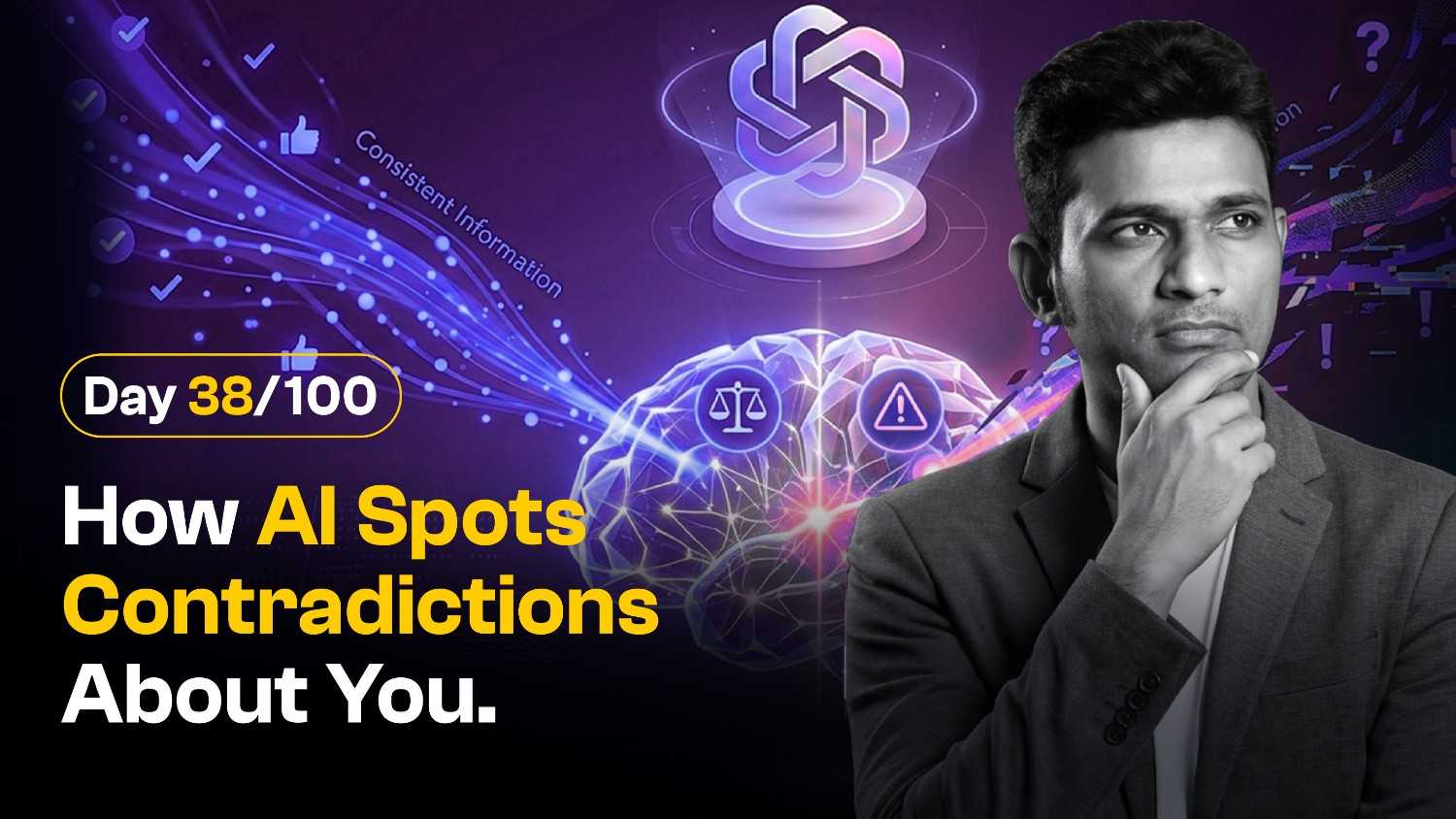
How Does AI Spot Contradictions About Your Brand?